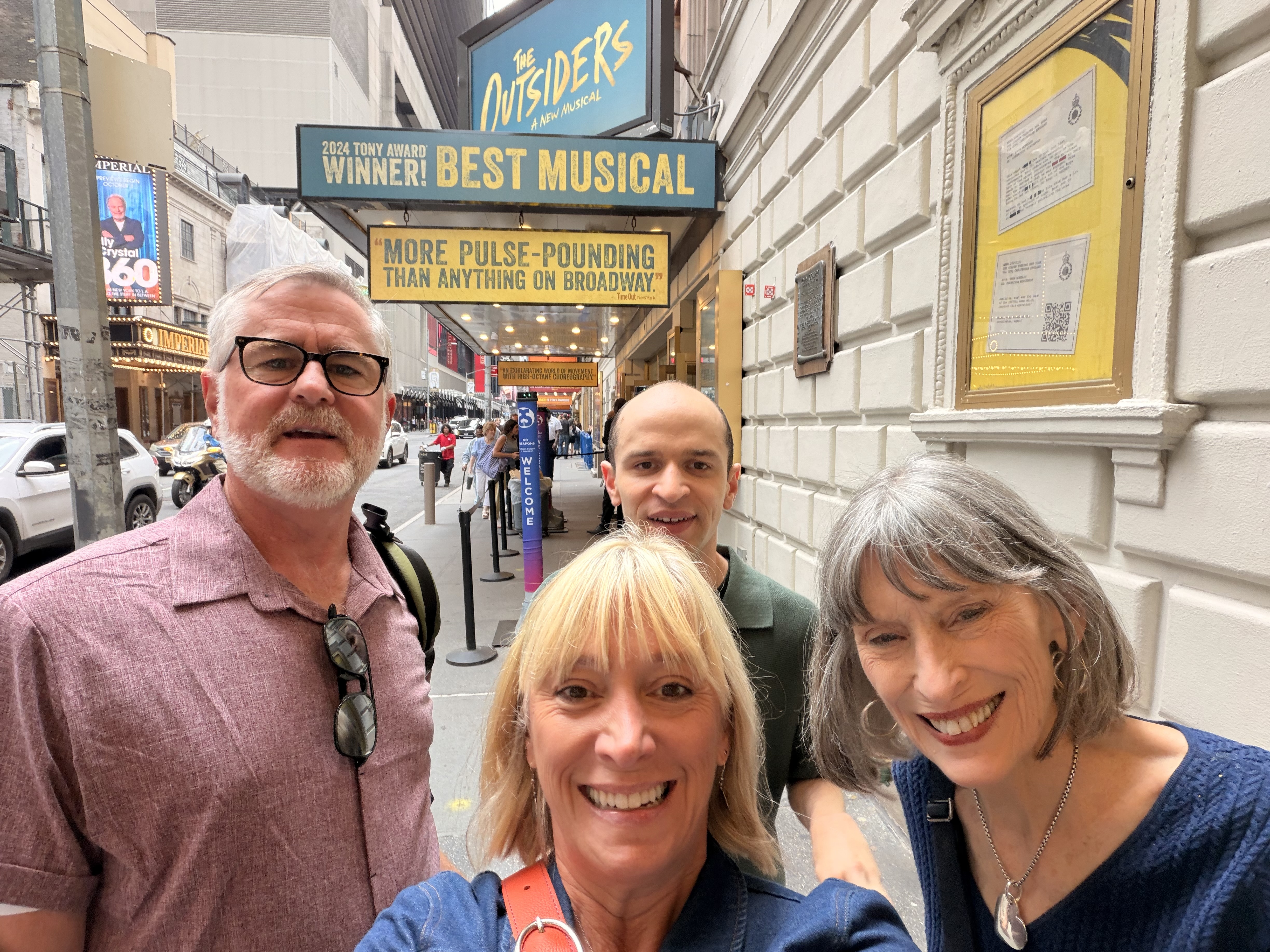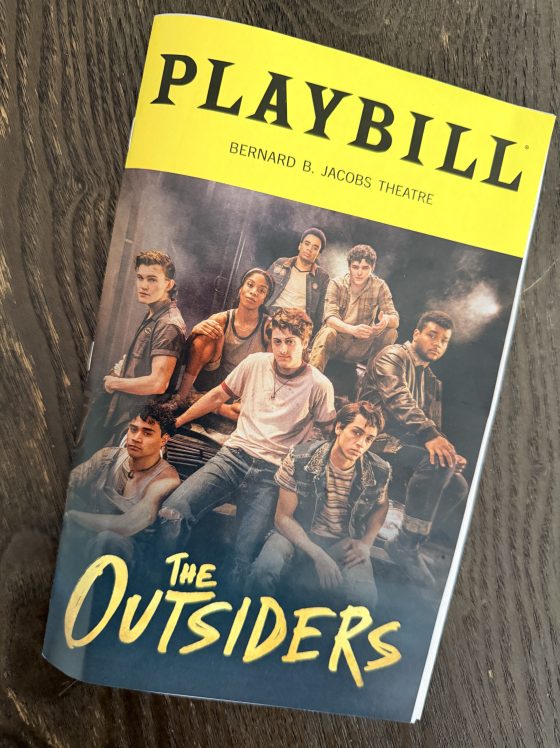
Sunday, Mymom took Jack, Dan and I to see The Outsiders on Broadway.
I knew the story and I knew it was emotional. I knew there would be music and fighting and friendship and loss. And, I guess on some level, I also knew that at some point I would look over at Jack and see him sobbing.
Not a little tear rolling down his cheek. Ugly, dramatic, Broadway-worthy sobbing.
Jack’s response to emotional scenes is legendary. He goes to the movies every week with his friend/caregiver/other mother, Monica, and she needs to take tissues whether they’re seeing Spiderman or Minions. And, Maria (also a bestie/caregiver/other mother) has shared many stories of Jack breaking down as her daughter, Jamilla, performs with her guitar.
When someone doesn’t talk, people sometimes make assumptions about what they understand. What they notice. What they feel. How connected they are to what’s happening around them. If you assume that Jack’s lack of speech means he doesn’t get it, you’re wrong.
Jack gets it. He gets the intensity of loss. He gets the beauty of music. And he got The Outsiders.
He understood the friendships. He understood the loss. He understood that these boys loved each other and that terrible things were happening. He felt it deeply enough that emotions came pouring out of him. When this happens, there is something both heartbreaking and beautiful about watching him.
It reminds me that communication and connection are not the same thing.
Jack may not have been able to tell us what he thought about the show on the ride home. He didn’t analyze the characters or tell us which song or dance was his favorite. He couldn’t explain why he cried. But that doesn’t mean he wasn’t completely there. He was AND was fully connected. To the story. To the music. To the dancing. To the sadness. To the beauty.
Sometimes I think we place far too much importance on words — Jack’s proof that silence can be quite loud. And, apparently, some people — myself included — don’t always place enough limits on their own words. Last weekend I participated in an ALD No Limits episode about bladder dysfunction.
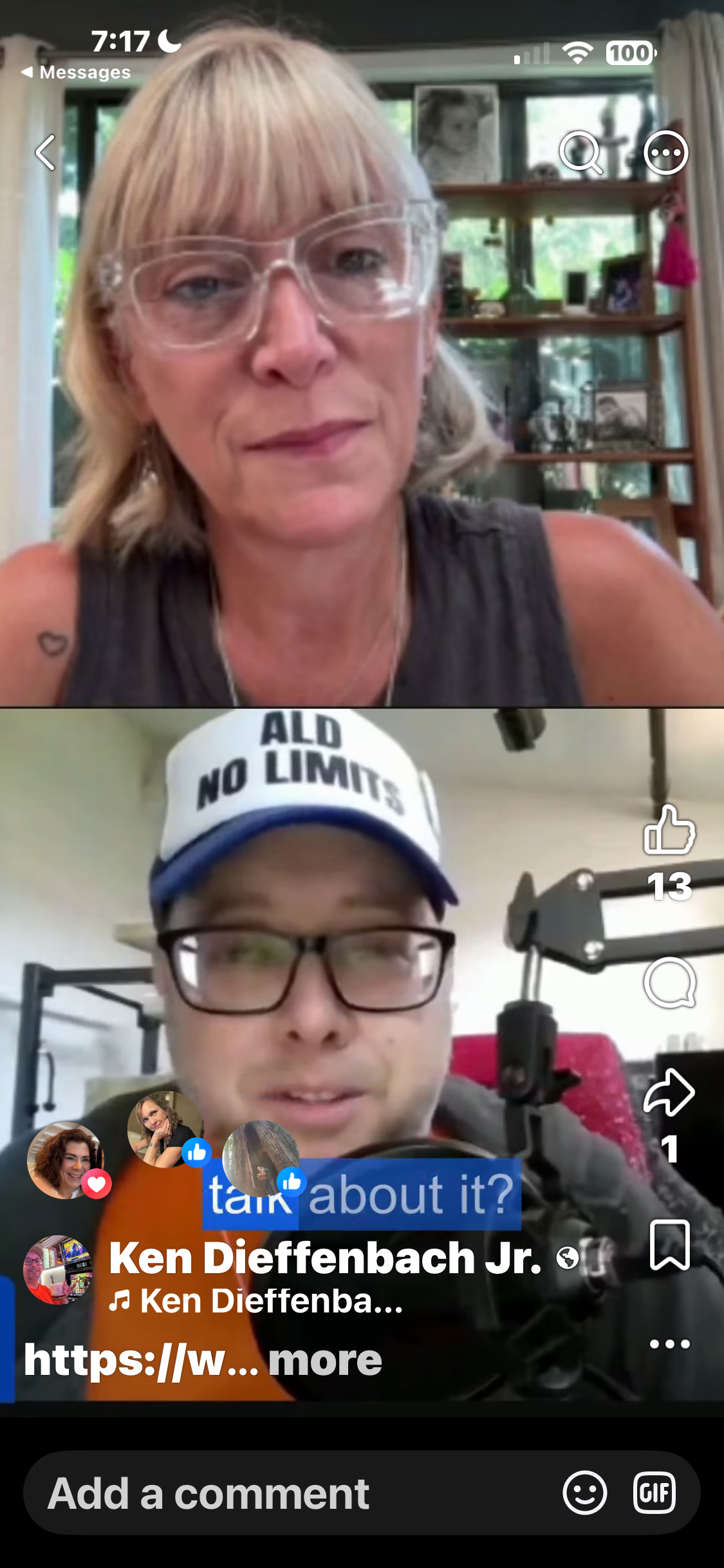
Yes. Bladder dysfunction.
Those of you who have followed our ALD journey for a while know that I’m not particularly shy about discussing the less glamorous parts of this disease. ALD comes with MRIs and transplants and medications and sometimes unplanned/messy/embarrassing pee. For years I would share Jack’s story, Jack’s symptoms, but lately I’ve been sharing my own.
It’s been mostly in-person when we get time with our ALD family or on calls that aren’t taped for the public. But, apparently, when someone puts me on a panel and asks me ANYTHING, I’m willing to share. A lot. Even when I’ve been told that it will be taped and posted and shared. There have been moments since Saturday that I’ve wondered, Did I share too much?
Possibly. Actually, probably. Oh well.
Bladder dysfunction is one of those things that people live with but don’t necessarily talk about. It’s embarrassing. It’s personal. It’s messy. And when nobody talks about the messy stuff, everyone quietly assumes they’re the only one dealing with it. Ken and Christie (the hosts of ALD NO Limits) have appreciated that not talking about it can be dangerous/isolating and have been encouraging the conversation. Aaron, Julie and I were willing to participate and share. It was an open conversation with close friends. We all seemed to forget that there was a red light on … recording every second.
Last night at 3 am (when my brain likes to wake me to spin) it occurred to me that as embarrassed as I am about sharing all I did, I shared for the right reasons. I shared to help others understand they’re not alone. I shared because people should not be ashamed of symptoms that they cannot control. I also though that maybe there is something connecting these two completely unrelated moments from the last few days — Jack sitting silently in a theater, tears streaming down his face AND me sitting on a panel talking a little too freely about peeing myself.
Connection doesn’t always look the way we expect it to.
Sometimes connection is recognizing that a person who can’t tell you what he’s feeling is actually feeling EVERYTHING and sometimes it’s being willing to talk about something uncomfortable because it has the power to help someone else realizes they aren’t alone. After almost twenty years of ALD, I’ve learned that silence doesn’t mean someone has nothing to say. And talking about the things we’re supposed to keep quiet about can sometimes be exactly what someone else needs to hear.
Those are my deep thoughts from Speir Drive at 3 am.
Stay gold Pony Boy.
Get it? The Outsiders AND the color of pee — there goes the connection again;-)
Love, Jess