THIS is ALD #9 — Blake

Last fall I went to an ALD symposium with several other families effected by our disease. Among the group was a couple, John and Kathy. I learned quickly that they had recently lost their son, Blake. I was shocked that just four months after losing their son, they had driven from their home in Tennessee to Atlanta to share their story. After spending two days with them, my shock turned to admiration for these strong, loving parents determined not to let their son die in vain. I reached out to Kathy as soon as I started the THIS is ALD project, hoping she’d be willing to share their story. She agreed instantly. The piece is upsetting, but beautifully written — as is Blake’s smile.


IMG_5265

THIS is ALD #9 — Blake

Vacation 2010 Utah 003

Our son Blake, like many other ALD boys, made all of his milestones as a baby and was a typical boy who enjoyed living his life to the fullest. He played soccer until 5th grade and performed well in school. In middle school, he ran cross country, enjoyed riding his mountain bike, sang in a special chorus group called Encore, and was an honor student. He was elated to be invited into the Duke Tipster program and was asked to take the ACT in 7th grade. He loved school, especially history, reading, and politics. In the first grade, he could not understand why he had to wait until he was 18 to vote!  Blake, like other ALD boys, had a great and wicked sense of humor.  I sometimes wonder if God blesses our ALD boys with such a great sense of humor because he knows they will need it to endure the monster we call Adrenoleukodystrophy.

On a normal Friday morning in January, Blake awoke with a virus.  That afternoon, his temperature went from normal to 107 in a matter of minutes.  We rushed him to the ER at Children’s Hospital where they attributed the virus to Addison’s Disease and adrenal malfunction, a precursor to an ALD diagnosis.  Blake was sent for a CAT scan and evaluated by the neurologist on call who admitted Blake on her suspicion of ALD.  We thought she was crazy!  After all, we had a normal, happy, healthy, 14 year-old son.  Before he could be released on Sunday, he suffered a grand mal seizure.  Within twelve hours, an emergency MRI confirmed the Adrenoleukodystrophy diagnosis.

One week later, we were on our way to Amplatz Children’s Hospital at the University of Minnesota to see if Blake would qualify for a bone marrow transplant. Blake’s Loes score, to the shock of the doctors in Minneapolis, was a 13.5. They decided that he would qualify because he was such a “high functioning” ALD boy. They could not believe he was in Honors classes much less making As and Bs! Blake had his first stem cell transplant on March 21st, 2012. He did not engraft. We were heartbroken and terrified for our son.  The medical team decided that since he was doing so well that they could try another BMT. He was only the 5th of 45 boys who did not engraft to undergo a second BMT. This time, on June 13th, they used actual bone marrow from a donor in Germany, and he engrafted at 100%! We were over the moon! We had saved our son! He had beaten the odds! Little did we know, this would not be the case.

We came home on September 28, 2012. Blake was legally blind by December. He went back to school the following August to start his sophomore year after being homebound his entire freshman year. He had an aide that took him to each of his classes. While Blake struggled with processing and math, his school modified for him in those areas. He continued to score high on state exams and performed well in his classes. He graduated in May 2016 with dreams of going to college. He wanted to be a neuropsychologist and move back to Minneapolis to work with children, especially ALD boys, going through bone marrow transplants. Through his 4 years of high school, we kept those dreams alive for him! By October of 2015, Blake was wheelchair bound. In February of 2016, Blake had a seizure that would take his speech and ability to swallow. He had begun to have problems with both a few months prior. He was in the hospital from February 27 until March 11, unconscious for most of it.  At that point, Blake needed a g-tube. Blake would finish his senior year at home in a hospital bed, but he was able to graduate with his class which was so important to him! Despite all of this, we enrolled him in Philosophy at one of our local community colleges. We were bound and determined to keep his dreams alive! He attended class three days a week, unable to speak or swallow, wheelchair bound, and completely blind. Blake would never, ever, give up!

On the Tuesday before Thanksgiving 2016, Blake had an hour-long seizure on his left side.  After, (he continued to have small seizures occasionally from June 2013 until this one), he was permanently bedridden. The doctors in Knoxville and in Minnesota felt that Blake’s ALD was progressing too deeply in his brain to detect, for his MRIs showed very little or no change from time of transplant until March 2016. The doctors did not understand his continued decline as other ALD boys with far worse MRIs were still walking, talking, seeing, and speaking.

Our beautiful son earned his wings at home on June 1, 2017 at age 19. He is now free of the body that so utterly failed him. He can dance, sing, laugh, walk, and see again! Blake Edward Switow is our son, warrior, hero, and our Guardian Angel!

Always remember, laughter is good for the soul!

— Kathy

I’ve read over this piece a half dozen times, trying to figure out what to write as a follow-up. I’m having trouble finding the words through my tears. I connected right away with Kathy. She felt more like an old friend than an acquaintance at a conference. It’s heartbreaking to learn the details of their family’s journey with this disease. And, ALD didn’t just take their son, ALD was particularly wicked with their family.

Thank you Kathy for sharing your story. It’s important for people to understand that ALD doesn’t always start progressing at the same age and it doesn’t always follow the same path. I’m grateful for your honesty — you have a huge fan in NJ. If fact, after people read this, I’m guessing you have many!

Love, Jess

THIS is Alexander Disease (a cousin of ALD) #8 — Olivia Kay

By now I hope you are starting to understand Adrenoleukodystrophy (ALD). If you know our family or have followed Smiles and Duct Tape for a while, you know what ALD looks like for Jack. THIS is ALD has hopefully helped you to better understand what the disease looks like for other patients. I have many more of those stories to share, but today I want to share a story about a little girl named Olivia Kay and a disease called Alexander Disease Leukodystrophy.

Leukodystrophies are a group of rare, progressive, metabolic, genetic diseases that affect the brain and spinal cord by destroying the myelin sheath. There are dozens of Leukodystrophies (including ALD) and Alexander Disease is the most rare of the bunch.

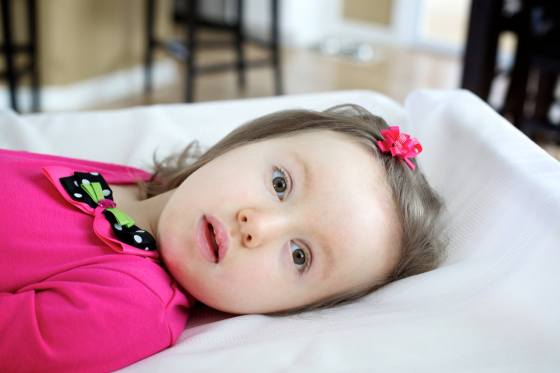
Olivia Kay’s mother, Lisa, offered to write their family’s story and I was eager to share a story about another disease related to ALD. Meet Olivia Kay.

IMG_5265


THIS is ALD (actually, Alexander Disease) # 8 — Olivia Kay

10562749_587818981327329_5690114912695379281_o

It was December 10, 2009 when I received a phone call from a doctor with the Cleveland Clinic. Did I know that morning that when I would wake that very day, it would become my daughter’s “day of diagnosis”? In the community of “parent’s raising special needs children”, it’s the day you treat like a holiday, but often not celebrated by any means. You never forget it and dread when it’s near. Like most parents, they remember that day just like any other parent never forgets the day their child first walked, or said their first word or peddled their first bicycle. It was the day that I was told my daughter would not live very long and she was going to die. Now I carry that day with me, for the rest of my life.

Olivia Kay was born with Alexander Disease Leukodsytrophy. Alexander Disease is the rarest form of more than 50 forms of Leukodystrophy. She was diagnosed with infantile onset, which means, between the ages of birth and 2 years of age. Diagnosis can only be verified through genetic testing. And sadly, there is no cure. Those who are affected by the disease appear healthy until the onset of symptoms. Olivia was very healthy and started having developmental issues and seizures at 10 months of age. This began our journey and the start of many hospitalizations and medical appointments.

There are three onsets – Infantile, Juvenile and Adult. Onset of the disease is due to the destruction of myelin in the brain caused by mutations in the GFAP (Glial Fibrillary Acidic Protein) gene.  This essential protein is responsible for providing strength to important cells.

Unlike other Leukodystrophies, Alexander Disease is not always hereditary. It is caused by a sporadic gene mutation within the GFAP gene, meaning the mutation occurs without being inherited from the parents.  There are some cases of Adult onset Alexander Disease where the disease has been found to be genetically inherited, however, this is rare.

With Alexander Disease, many children suffer from seizures along with many other symptoms. After learning of her diagnosis, the doctor told us to “treat the symptoms and find a support group”. I look back now and realize, that was absolutely of no help to me. Knowing that our daughter would never outlive us was heartbreaking; we lived in denial for quite awhile. Knowing how to navigate life moving forward, was scary and uncertain. And we would face this most likely alone.

As we walked this journey with our child, you quickly become not only the parent, but you become you the doctor, the nurse, the therapist and the advocate. As we struggled with some of the most emotional and heartbreaking decisions you will ever have to make for your child, we knew that what we were doing were the best decisions for Olivia’s quality of life. She endured many what I call “seasons” of the disease. From feeding difficulties, to gastronomy tube, sitting up in her wheelchair to bedridden, to respiratory challenges and ventilators and digestive and bowel regimes. Each time we entered a season, she tackled each one with bravery and strength.

Sadly, Olivia passed away on April 28, 2017 at the age of 8. I am so proud to have called Olivia, my daughter. She taught me more in my life that I will ever learn in a whole lifetime. Olivia changed lives in her community and impacted strangers who met her.

The most honoring thing that we can do as her parents now; carry her legacy on to further bring awareness to this disease, help support more children and families living with illness and share her story so that people can become more knowledgable about all Leukodystrophies.

— Lisa

*******

I had a hard time sorting through the photos that Lisa sent me. Tears flowed down my cheeks knowing what Olivia Kay’s small body suffered and what her family went through. She was such a beautiful girl with shinning light in her eyes. Lisa describes how her young daughter tackled each “season” of the disease with bravery and strength. A remarkable girl. A remarkable family.

Thank you Lisa.

Love, Jess


THIS is ALD #7 — Nicholas


IMG_5265

THIS is ALD is gaining some traction. Not just in the ALD world, but I’ve heard from many non-ALD folks that they are appreciating learning more about the disease. ALD can look very different person to person. Here’s a story about a boy named Nicholas. Another success story thanks to an early diagnosis.

THIS is ALD #7 — Nicholas

IMG_1048

Our 13-year-old son Nicholas is a thriving survivor of cerebral ALD. His story so far is one of the rare success stories of this devastating disease thanks to family history (which gave us the knowledge needed in order for him to be diagnosed at birth), the Lorenzo’s Oil study, early detection through brain MRI, and a bone marrow transplant (BMT).

My father died from complications of AMN (Adrenomyeloneuropathy is the adult onset version of ALD. It generally develops during the late twenties or early thirties and progresses more slowly) and I found out I was a carrier at age 15. We contacted Kennedy Kreiger Institute at Johns Hopkins (where my father’s neurologist Dr. Hugo Moser had been) to prepare for testing once I became pregnant many years later. My husband and I were devastated to get the results that our perfect little baby boy had ALD, he was only a week or so old when we received the news. It was one of the worst days of our lives. We enrolled him in the Lorenzo’s Oil study at 18-months-old (Lorenzo’s Oil is a combination of oils that is thought to limit the accumulation of very long chain fatty acids that build up in the brain in ALD patients. It can slow down the onset of the disease). He was raised on the strict low fat diet and daily intake of the oil in the hopes it would keep demyelination at bay. Nicholas also had yearly brain MRI’s and we made yearly trips to Baltimore for testing and follow ups with the specialists. Dr. Gerald Raymond kept a watchful eye on him for nearly ten years.

The Lorenzo’s Oil study ended when Nicholas was ten, and we were told that hopefully he had escaped the most devastating form of the disease. Within a year of stopping the oil, Dr. Raymond spotted a small lesion in Nicholas’s brain caused by ALD and our lives began to spiral. We knew this could be the beginning of the end and our only option would be a BMT. Nicholas was a perfect candidate for gene therapy with a Loes score of 1 (the 34-point scoring system used to describe the evolvement of ALD) and no other symptoms. So we waited and Nicholas underwent MRI’s every few months to monitor the lesion…we had time on our side due to very early detection and slow progression, but we felt like it was a ticking time bomb and it was the worst several months of our lives full of worry and the unknown. Life came to a halt in our minds and hearts, yet we had to carry on for our children’s sake. We were referred after six months to Dr. Wes Miller at the Univ. Of Minnesota Children’s Masonic Hospital for consultation.

Nicholas was now eleven and needed to know exactly what was going on. It was a horrible visit full of heart-wrenching details of what a bone marrow transplant involved and what we were facing if the gene therapy study wouldn’t reopen. Within a few months, we were told the study wasn’t reopening at that time, and our only option was a BMT. The time was now as Nicholas was still extremely healthy and strong and no outward signs of ALD. Despite the challenge of living away from home for four months and the harrowing medical treatment of completely wiping out our son’s immune system and replacing it with another, we now believe it was the best decision and that the Lorenzo’s Oil diet quite possibly helped delay any ALD progression until late in the critical childhood years. We had the challenge of no blood siblings (we have a beautiful adopted daughter), but were gifted with a perfect umbilical cord blood donor match that saved our son’s life. We couldn’t be more grateful for the ALD specialists and BMT team of doctors who did all they could to save our son’s life and halt his disease in its tracks (halted disease progression was already shown on the 30 day post BMT MRI).

Nicholas is one year out from transplant and healthy (with adrenal insufficiency) and active in athletics. We know he is a miracle kid and this is not the usual case by any means. Newborn screening must be passed in all states so that every ALD boy has a fighting chance. We also know and have seen the many risks of BMT, as we lost an ALD friend in MN to one of the many risks of transplant and have heard of so many others. Nicholas is a best case scenario, we are forever grateful for where he is now. We want to do all we can for other boys like him.

Julie

(I added a few details for readers unfamiliar with ALD — Jess)

*******

It’s thrilling to read how well Nicholas is doing one year post transplant. Again, his family had the luxury (THIS SHOULD NOT BE A LUXURY) of knowing that he carried the ALD mutation. This knowledge allowed them to prepare and act — initially with Lorenzio’s Oil then with a BMT.

Since transplant, Nicholas has been busy running 5ks and has even finished his first triathlon. His family has also been actively raising money and awareness for ALD hosting a Run for ALD event this last November.

Thank you Julie for sharing Nicholas’s story.


Love, Jess

things come in threes – PLEASE!

images-82

Things come in threes – I hope. The truth is that I’m not sure I can take a number four if it presents itself. You guys might find me roaming the streets of Maplewood, screaming obscenities.

I’ve said that I don’t believe in karma or fate or destiny, but I’m starting to believe in really bad luck. I might need to start carrying around a four-leaf clover or wearing a horseshoe around my neck.

2018 is not off to a good start.

1.) The stomach flu — It seems to still be lurking around the house, waiting for the next victim. And, apparently it doesn’t come with the whole “you develop an immunity to it” thing, because I had it twice. I’m all for losing weight quickly, but this is a little ridiculous.

2.) Burst pipe — Still not resolved. We were able to isolate the problem and I was proud of myself for being so calm and cool with the plumber, “Please, take care of any emergencies first.” NOW I wish that I hadn’t been so cool. It’s been over a week.

3.) No heat — We woke up this morning and it was freezing. Dan and I both fooled with the furnace, but it wasn’t budging. I called the oil company and then got to go through our morning routine wearing a coat, mittens, hat and Ugg boots. Thank goodness Jack has a sense of humor and loved watching his mama try to make breakfast with mittens on. Once he got on the bus and my distractions were gone, I had time to really freak out. I kept thinking about our pipes as I watched the thermostat lower. I had every faucet dripping and space heaters in the bathrooms. I called Dan at the office by mid-morning and started crying, “2018 must be cursed!”

Four hours after leaving a crazy message with the oil company (cool Jesse was long gone), my hero arrived and was able to fix the problem. We were out of oil — don’t laugh. The house is warming up, but it’s going to take a while before I warm up to this new year.

I realize that none of these things are tragedies — but come on!! I’m tired and have stuff to do.

Okay. I’m done complaining. I’ll slap a smile on my face and go out and face the day.

Love, Jess


THIS is ALD #6 — Donovan

IMG_5265

Another ALD story to share, and this one is a little different. This is a new story for ALD –hopefully the future of our disease. It’s a story about a boy, newborn screening, and a bright future. Meet Donovan.

THIS is ALD #6 — Donovan

FB_IMG_1514996771885

My son, Donovan, was born in Connecticut in 2016. When he was 3 weeks old, his pediatrician called and said he tested positive for a “metabolic disorder” on his newborn screen and needed further testing. She was purposely vague because she didn’t want me to Google the disorder until we had confirmed answers. It didn’t do much to keep me from worrying, though. She mentioned that if it was confirmed, my 3 daughter’s would need to be tested as well. Without much information, I was scared for my son’s life, and the health of my daughters. 

The tests came back positive, Donovan had ALD. Don’s pediatrician continued to be vague, and I understand why. She wasn’t an expert on the disease, and didn’t want to give me any false information. My first question was “Is it life threatening?” All she could say was, “It can be.”

That’s when the Googling started. 

We met with a geneticist at Yale, who was the only expert in the state. The information she gave us was overwhelming, and tough to process. So many unknowns. When will it manifest? Will it ever? What type will he have? How severe will it be? There was no way to tell. My husband and I spent several nights cradling and weeping over our newborn son. So small and perfect. How could he have this monster inside of him?

After the diagnosis, I joined the ALD support group on Facebook and met some amazing and wonderful people. I was connected with lovely families here in CT, some who were also diagnosed through newborn screening! 

At 3 months, they tested Donovan’s blood to get an understanding of his adrenal function. At 6 months, he had his first MRI. I was terrified. I knew there wouldn’t be anything to see in his scans at this age, but they had to put him under so that he would be still, and that worried me a lot. He came through it like a champ, though. It didn’t seem to bother him at all! 

Donovan is unique. First of all, he did not inherit the gene from me. I am not a carrier, and no one in my family, or my other children, are at risk. Donovan’s gene spontaneously mutated while in the womb. This only happens in 5%-7% of ALD babies. Secondly, he is, what his geneticist called, a “mosaic.” This means some of his cells are mutated, but some are not. She seemed baffled by it. She didn’t know how or why it happened that way, or how that might affect his condition. If at all. More unknowns. So they treat him like any other ALD patient, and I am grateful.
 
Don is now over a year old. He will have yearly MRIs until he is 3, and the every 6 months. He will also have his adrenal levels tested every 6 months. So far, all his tests have been normal.

ALD has opened a whole new world to us. I’ve met people I never would have otherwise known. Strong, beautiful, inspiring families. Some of their stories are terribly tragic. My husband asks me why I read those stories if it makes me so sad, and I tell him, “Because they put their pain out there. I just want them to know someone is listening, and someone cares.”

I am not a perfectly patient person, not at all! But I do think I live a bit differently, now. I take more pictures and videos, I give more hugs and kisses, I say more “I love yous.”

Donovan is my 4th child, but my only son. His older sisters adore him! He is cuddly and happy. He is curious and likes to get his hands on everything! He has even started climbing, now! His sister, Josephine, is only one year older than him and they are best friends. They do everything together and always want to be with one anther. My older 2, Mika and Ripley, help change diapers, teach, and play with him. 

None of our children know much about his ALD. My 9 year old has heard us use the term and noticed his many doctor appointments, and she just understands that he has something inside him that could one day make him very sick. So we have to keep an eye on him. We have settled into our “normal.” Life has gone on, and I couldn’t be more grateful for that! For the chance for life to go on.

-Diana

*******

Diana and I met through the ALD Support group she mentioned and when she agreed to share Donovan’s story I was thrilled. It’s so important that people realize the advantages of newborn screening and an early diagnosis. Although the news must have been a huge slap to their family they are allowed to prepare and monitor.

The hope is that beautiful little Donovan will go on to have a perfectly normal life and ALD will stay dormant forever, but just in case, his family has a plan in place. It’s thrilling.

Diana told me that she wasn’t a writer, but I beg to argue. Her voice shines as a mother who loves her children and will do anything she needs to do to give them the best life possible. Thank you for sharing your story, Diana, and for helping people better understand our not-so-rare disease and the importance of newborn screening.

Love, Jess


happy new year!?!!!

IMG_0217-1

There is nothing like waking up New Year’s Day with a head full of fun, foggy memories, and feeling grateful for everything in your life – your family and friends being on the top of that list.

It was nearly 11:00 am before us Torreys were all up and ready(ish) to face the day. We had just a few goals for the first day of the year and we could do all of them in our pajamas – perfection. We needed to clean up the house from our New Year’s Eve festivities, take down the Christmas tree, and eat all the calories in our kitchen before New Year’s Resolution #1 could begin.

Everything was going according to plan until we heard Anna yell, “Mom, there’s water pouring out of the ceiling!”

Happy New Year!!?!

We’ve been through this before. Our second floor washing machine pipes are a little too close to the outside wall, and seem to enjoy finding the least opportune time to freeze and burst. We thought we had resolved the issue two years ago. We hadn’t.

I know our family has the reputation of being optimistic and flexible and calm and easy-going, but trust me, when there is water dripping from our ceiling, we are none of those things. “Fu#k” was the word of choice as we all ran around the house – water shut off, towels thrown all over the floor, large pots trying to catch the stream. Our plumber almost laughed when we called him, “Pipes are bursting all over town. No way I can see you any time soon.”

We called another plumber . . . and another. “Maybe by the end of the week.” was the best answer we got.

Fu#k!!!!

I was convinced that 2018 was going to unravel. That somehow what happened in the first day of the year would determine how the year would play out. Our house was going to fall apart, we would need to spend Anna’s college fund to pay for repairs, and we would never have access to clean clothes again.

It took a few hours, a lot of swearing and a good look at what we were dealing with before we calmed down. It wasn’t so bad. We had shut the water off before any real damage was done. The plumber will come by the end of the week and fix the issue and we have an old washing machine in the basement so we don’t need to be smelly.

By mid-afternoon New Year’s Day, our house was clean, the Christmas decorations were neatly stored in the basement and we were sitting in front of Netflix eating ridiculous amounts of lasagna, cookies, and peppermint bark (I hate whoever brought that into our house).

2018 wasn’t ruined.

I stopped believing in karma, destiny and fate years ago. How could I believe in such things? I’ve seen too much pain and suffering throw around great people to credit anything but chance.

Our pipe burst because it’s been super cold — bad luck. We were able to get the water shut off before the ceiling caved in — good luck! We had an awesome New Year’s Eve with a pile of festive friends — good luck! Jack and Anna are both healthy and doing great as we start the new year — good luck! One of our so-called friends brought not one, but two boxes of peppermint bark — bad luck.

It’s a new year. 365 days and some will be great, some crappy. My newest resolution is that I will take each day as it comes. I can’t promise there will be no cursing, but I think I can do this!

Wishing everyone a decent 2018 with more good days than bad!!!

Love, Jess

P.S. Peppermint Bark = 13 points on Weight Watchers;(


HoliDAZE

Anyone else exhausted? I keep looking at the calendar to see what day it is and almost hoping that this holiDAZE season is over. Between the cookies and the wine, I’m in much need of some New Years resolutions and looking forward to getting started.

Shame on me. Three more days and I need to enjoy every minute of it!

Our holiday got off to a rocky start. My in-laws arrived for our Torrey Christmas celebration on the 22nd, and by early morning on the 23rd both Jack and I were vomiting. After cleaning up a stinky mess (thank you PopPop and Sue) they escaped from  our house to meet the family elsewhere – no need to spread the germs around. We sent them out the door with the food we had been preparing for days. If I hadn’t felt so terrible I would have felt REALLY terrible. Luckily we managed to avoid the hospital (the stomach flu often requires an ER visit for JAckO) and by the next day we were on the mend.

We’ve been celebrating every since!

Lots of festivities with family and friends and lots of time being lazy around the fireplace. Except for the tummy issues, it’s been great AND IT’S NOT OVER. New Years Eve is tomorrow before reality finally sets in.

IMG_0135

Enter a caption

2018 is a big year for our family with Anna heading off to school in the fall. Johns Hopkins University is lucky to have her and we are thrilled that she is headed to a school that feels like home to us. Dan may have received a JHU diploma, but I spent a good part of my college years in Charles Village pretending to be a Blue Jay. As hard as it will be to drop our girl off in August, at least it feels familiar. AND we all know that we will be finding any excuse to drive down for a visit;) Sorry Banana . . .

The adjustment will be difficult, but we will find a new rhythm. The house will be quieter, but we will figure it out. That’s what we do. We figure things out.

Until then, I’m going to work on keeping my New Years resolutions and enjoy our time together.

Here’s my list:
1.     Not just to pay for Weight Watchers, but to FOLLOW Weight Watchers (the stomach flu did help me drop a few pounds, but it’s not a great diet plan)
2.     Limit my vino intake – I’m too old for hangovers
3.     Encourage Jack to use his iPad. We need to get him talking before Anna leaves
4.     Up my yoga to two days a week . . . maybe three                                                             5.     Continue sharing THIS is ALD – please contact me if you are willing to share your story jctorrey@mac.com                                                                                                                                  6.     Start my next book                                                                                                                         7.     Move to Baltimore;)

Wishing everyone a Happy New Year!!!! 2018 is going to be amazing!!!

Love, Jess


THIS is ALD # 5 — Mason

We are busy celebrating Anna’s big news and preparing for the HoliDAZE, but wanted to take some time to introduce you to another ALD champion, Mason.

I met Mason’s mother, Tina, this fall and she agreed to share a bit of their ALD story. Tina is a remarkable mother and, I’ve not met Mason in person, but I’ve fallen in love with his smile.

IMG_5265

THIS is ALD #5 — Mason

18952734_1454610181227238_3649376892900181940_n
        Mason was the best baby.  He developed all milestones at or before the age he should.  He was riding a bike without training wheels at 3.    We had no concerns with his development until second grade.  He had a hard time with multiple step directions and with math (common core).  He would have a concept and then it would be gone. He would bring his math papers home and I would erase them and give it to him to practice.  He didn’t remember ever seeing these papers. 
        Mason was diagnosed with Adrenoluekodystrophy (ALD) in April of 2016.  He was 8. We were told there was really nothing that could be done.  We have an awesome support system and everyone started researching and found the team in Minnesota (University of Minnesota Pediatric Blood and Marrow Transplant Program is a leading program for treating ALD) .  We made our first trip to Minnesota in May where they decided Mason was a candidate for a bone marrow transplant.  His Loes score (the scoring system to evaluate the evolvement of X-ALD) was on the high side, but Mason’s doctors said he was compensating very well with what the disease was doing to his brain.  They were hopeful.  We were so scared but this was the first time someone gave us hope. 
        Mason had his bone marrow transplant on July 11th, 2016.  We spent 30 days in the hospital and then we had to be in the area for 3 months (some hospitals release transplant patients to rehab centers/other local facilities once they have reached a certain milestone. In Mason’s case it was to a Ronald McDonald House near the hospital).  By this time, he lost a lot of vision, hearing and processing skills.  When we left the hospital, he was in a wheelchair and couldn’t see.  Even then he had goals…goal 1 was to get rid of his NJ tube (feeding tube) and goal 2 was to be home for his birthday. 
        They discharged us to go home on October 19th (his birthday is October 24th) and he was NJ tube free! 

        Mason is an incredible fighter.  He told a therapist when asked about how he felt about his vision loss that he’s not going to let it get him down.  That’s the kind of kid he is.  He is a very friendly guy and loves to tell jokes and make people laugh.  He does get frustrated with things he use to be able to do that he struggles with now, but he usually has a smile on his face. He is currently back in his school which he loves.  He kind of regressed a little with social skills since he couldn’t be around kids his age and was very scared around them.  Once he got back in school, he gained a lot of his confidence back.  He is learning Braille and the use of the white cane for mobility.  After stopping a few of his medicines, he got some of his vision back.  He can see and read but at a slower pace. We are so blessed, grateful and amazed by his progress.  We had no clue this disease even existed.  Awareness is so important.

(I’ve added a few details to explain terms that the non-ALD reader might not understand – Jess)

******

Thank you Tina for sharing this piece. Mason’s story is similar to Jack’s in that there was not an early diagnosis. It’s important for everyone to remember how hard it is to diagnose ALD – why newborn screening is so vital to changing the future of this disease. Luckily, Mason had a successful transplant and is doing quite well. Life is complicated for him, but he seems to have the same great attitude and electric smile as JackO.

Love, Jess


Two-Armed Sister Clutch

img_0111.jpg

You’ve heard from me for ten years. Now, it’s Anna’s turn. When it came time for her to write her college essay I was excited to help, but like all things academic, she insisted on doing it on her own.

Two-Armed Sister Clutch

        I have to hold his torso carefully so that he can’t bite me. For years, as my brother has gotten stronger, my technique has evolved from a simple shoulder hold into the now perfect “Two-Armed Sister Clutch.” My dad takes care of his head to keep it propped up—after all, the neck is the most important part. After ten minutes of very cautiously carving away at his beard, the world’s brightest smile emerges from his newly exposed face. I’ve just shaved my nineteen-year-old brother for the third time this week; my favorite chore with my favorite person.
        A sharp automatic razor and Jack—that’s my brother—make for a very interesting endeavor. But despite the chaos of the project, it always gets me thinking clearly. I think about the disease that forced its way into Jack’s brain ten years ago and made him this dependent on me, and about the fact it has been TEN years. I think about who he was before his disease—my typical big brother, goofy and in love with life. I think about who he is now—my silent and disabled big brother, goofy and in love with life. And finally, I think about who I am, and who his disease has made ME.
        Shaving my brother is a difficult task. I start off by trimming the top layer of the every-so-gnarly hairs. The first layer of Jack’s story is one very long word (the first word with more than six letters that I ever learned): Adrenoleukodystrophy (ALD). That is the neurodegenerative disease that turned my family from one straight out of a J. Crew catalog to the very quirky, “special” family that we are today. I was six, Jack eight, when he was diagnosed with ALD and his brain function slowly unraveled. Suddenly, my brother’s voice wasn’t around to fill up my house with jokes and curiosity. Suddenly, I had to be the athlete of the family…and the social butterfly… and the nerd. And now, a decade later, I am a hop skip and a jump away from being a professional groomer, too.
        After I trim Jack’s beard, its time to crank the razor up and dig down through all the brush, rounding the jawline and inching in to each crevice. Shedding that hair makes Jack look so presentable,… so professional… so normal. I get flashes of Jack Torrey as an adult (Doctor? Lawyer? Artist?), walking the streets of a big city, wife and kids by his side, living a normal life. I see myself meeting him for a bagel and talking about our careers, our friends, or our families. Sometimes I just picture us talking. It has been ten years since Jack last spoke.
        Luckily, my feeling sorry for myself is quickly interrupted by the most amazing laugh to ever exist. The disease that stole Jack’s words and independence did not manage to steal his laughter. I look at him and see what that sweat-inducing work out really uncovered: a giant, radiating smile. I let go of him and he wanders around the kitchen, slowly making his way back to me, tongue out and eyebrows raised, to give the best hug any sister has ever gotten from their big brother. That is Jack’s way of saying thank you.
        I’ll never have a typical sibling to show me the ropes of life and gossip with when I’m older, but Ill always have Jack. I’ll have his smile to tell me to always work as hard as I can. I’ll always have his laugh to encourage me to give back to other people and other families. I’ll always have his hugs after a lacrosse game or job interview gone wrong. And, I’ll always have an escape when I want to think about these things all over again—after all, that boy could always use a shave.

Anna Cappello Torrey
Johns Hopkins University Class of 2022 (we just got the news!!)


Love, Proud Mom


THIS is ALD #4 – Jon

“When you hear hoofbeats, think of horses not zebras”

It’s a quote by a professor at the University of Maryland School of Medicine in the 1940s. A reminder to his students that, when searching for a diagnosis, not to think of the obscure until you can rule out the likeliest possibilities. I will never forget hearing it for the first time when a pile of medical students came into Jack’s room at Columbia Presbyterian Morgan Stanleys Children’s Hospital ten years ago. One of the students tapped the young man next to him and whispered, “Dude – THIS is a zebra!”

If Jack is a zebra, then Jon is a unicorn, with purple and cyan stripes. I met him this fall at an ALD event and I kept finding myself staring at him across the table. He’s in his mid-twenties, has his degree from the Milwaukee School of Engineering, is a comedian, and has ALD.

IMG_5265

THIS is ALD #4 – Jon

        This posting on Smiles and Duct Tape might have a different tone than most personal ALD stories. First off, I was diagnosed with ALD at the age of 1 due to the late diagnosis of my brother at age 6. It’s a common story. One that many of us have heard before, but did you catch what was odd? Maybe you did? I did, mainly because I’m the one writing this. There it is again.

old 4

        The story keeps going with a bone marrow transplant at the age of 6, still a pretty common age range for those who are familiar with ALD. The transplant was at Minnesota which is synonymous with ALD. I came home after the transplant, and lived a normal life. Give up yet? I, me, the one writing the article had the bone marrow transplant. After hearing everything that happens to some boys with this terrible disease, I sometimes forget just how amazing this, THIS, is.
        It may even come more to a surprise that the journey started in 1992, when I was born. ALD would hit the silver screen a few months later with the movie Lorenzo’s Oil. Six years later, and an incredibly experimental treatment lead and here we are. So this article will take a different turn than any other ALD article and I’ll share with you everything I’ve done since the transplant. Everything, that is now achievable, by any other boy who is prescreened.
        As far back as I can remember, I’ve always wanted to be an engineer. Love designing ideas in my Inventor’s Notebook and building with Legos. Even during my transplant I was building Lego kits that were 12 years old and up. I was 6 at the time. It kept me busy. Models surrounded my hospital and Ronald McDonald House rooms. The passion for engineering continued after the transplant, as I excelled in math and science classes. Getting straight A’s in grammar school while being active in Boy Scouts. Scouting let me explore many different subjects, experiences, and knowledge which I still used today. In High School, I enrolled in Honors Math and Science classes. Doing my best to continue my streak of mostly A’s with the occasional B. I had the opportunity to take a few AP classes and a college level chemistry course which helped ready me for college. Furthermore, after class, I joined the Theatre Club and found joy in performing and speaking on stage. Fell in love with it and did as many plays as I could. Boy Scouts became a large part of my High School career. I served on Summer Camp staff for 3 summers and came to earn my Eagle Scout. I was selected to be a part of the Order of the Arrow ( Boy Scouts National Honor Society). Eventually becoming the youth leader as Lodge Chief, giving service to all members in Waukesha County, WI.
        Before I even started High School, I knew I wanted to attend the Milwaukee School of Engineering. Everything in High School worked towards that goal, and my senior year, I received my acceptance letter, though I had a feeling I would. College was the best years of my life. I continued all my passions of math and science, except now it was set to 11. I kept up with theatre joining the MSOE Theatre Troupe. There I acted in 6 plays, and directed 2. But the best decision I made in college was joining Triangle Fraternity. It’ an engineering fraternity and I became best friends with all of them. I may have lost a brother, but gained 100s I know I can lean on. Still staying in touch with them and even helping me secure my after college job at Affiliated Engineering in Phoenix Arizona. Today, I design the HVAC systems for colleges campuses and health care facilities. It may not be the same as a doctor treated young boys with ALD, but the buildings I’m designing may someday find a cure for this disease. And I’m okay with that.

*************

I’ve read this piece a dozen times and each time I’m in awe of how little Jon references ALD. He’s just a kid who loved legos and the Boy Scouts and learning and building and theater, and friendships. ALD is part of Jon, but it’s way down on the list of things that define him.

Jon was a pioneer. Like the boys going though gene therapy now, in 1998 stem cell transplants for ALD were experimental. Jon’s family had already lost a son and chose to try something new to save Jon’s life. Not only did it work, but it worked before ALD took over. Honestly, meeting Jon you would not see any hints of our disease. It’s amazing. Inspiring. A little heartbreaking  — I can’t help but wonder about Jack and who he would have been had ALD not touched every single part of his life. It’s crazy how random this disease can be, BUT I’m thrilled that Jon has enjoyed such an incredible life and it’s just the beginning of his story!

Thank you Jon for sharing your ALD story. My dream is that, as the years and research move forward, your story will become the standard — boy gets diagnosed, boy gets treated, boy lives life.

Until then Jon — you are the ALD unicorn!


Love, Jess