Do you want me to push you?

Next Thursday, January 30th, at 7 pm ALD Connect is hosting the monthly Mental Health Call where my friend/ALD hero, Emma, and I will lead a healthy discussion about the importance of communication within a caregiving relationship. Hoping to see many of our ALD Community next week, but I wanted to take the opportunity to share with all our Smiles and Duct Tape readers why we’ve chosen this topic.

Whether you’re an ALD family or not, there are many people who are part of a caregiving relationship — a caregiver or care receiver. Whether you’re caring/receiving care for/from your child or spouse or parent or sibling or friend — I want you to consider adding an important question to your communication, “Do you want me to push (help) you?”.

At the last ALD Connect Annual Meeting and Patient Learning Academy I had the pleasure of spending time with Laurie and Emma Hayes – two ALD folks I absolutely adore. They’re a mother/daughter duo who have always impressed me. Laurie, the mom, and is a symptomatic woman with ALD. Emma is her adult daughter.

Throughout the weekend I would hear Emma say the words, “Mom, do you want me to push you?” Repeatedly. Laurie would sometimes take the opportunity to be pushed around in her wheelchair and other times she would deny the help. She was in charge.

There was something powerful about witnessing this simple moment between a mother/daughter — care receiver/caregiver. 

The question “Do you want me to push you?” symbolized more than just a literal action. It was recognition by Emma (the caregiver) of Laurie’s (the care receiver’s) autonomy, and it showed a commitment to working together. By asking and answering this question with honesty and openness, they were beautifully navigating their journey together with grace and understanding. 

We all talked about this often overlooked part of a positive caregiving relationship. Receiving care can be a difficult thing for people to accept. It often involves coming to terms with one’s limitations. And providing care can also be challenging. Not only can it be exhausting, even messy, but without open communication a caregiver may do too little or too much. Without a conversation a caregiver may not appreciate the help their loved one needs. It’s easy to fall into the trap of doing too much, believing it’s the best way to help. Laurie shared the importance of caregivers to recognize that, although someone may require help with one thing doesn’t mean they need – or want – help with another. Overstepping boundaries can unintentionally undermine the care receiver’s confidence and independence. The key is to strike a balance—stepping in when help is needed while allowing the care receiver to maintain as much control as possible. Communication is the key.

The most successful caregiving relationships are built on mutual respect, trust, and open communication. Caregivers must remember that their role is to support, not to control. Care receivers, on the other hand, should embrace the partnership, acknowledging their caregiver’s efforts while maintaining their own sense of agency. Laurie is always quick to share how grateful she is for the help Emma provides. Another beautiful thing to witness.

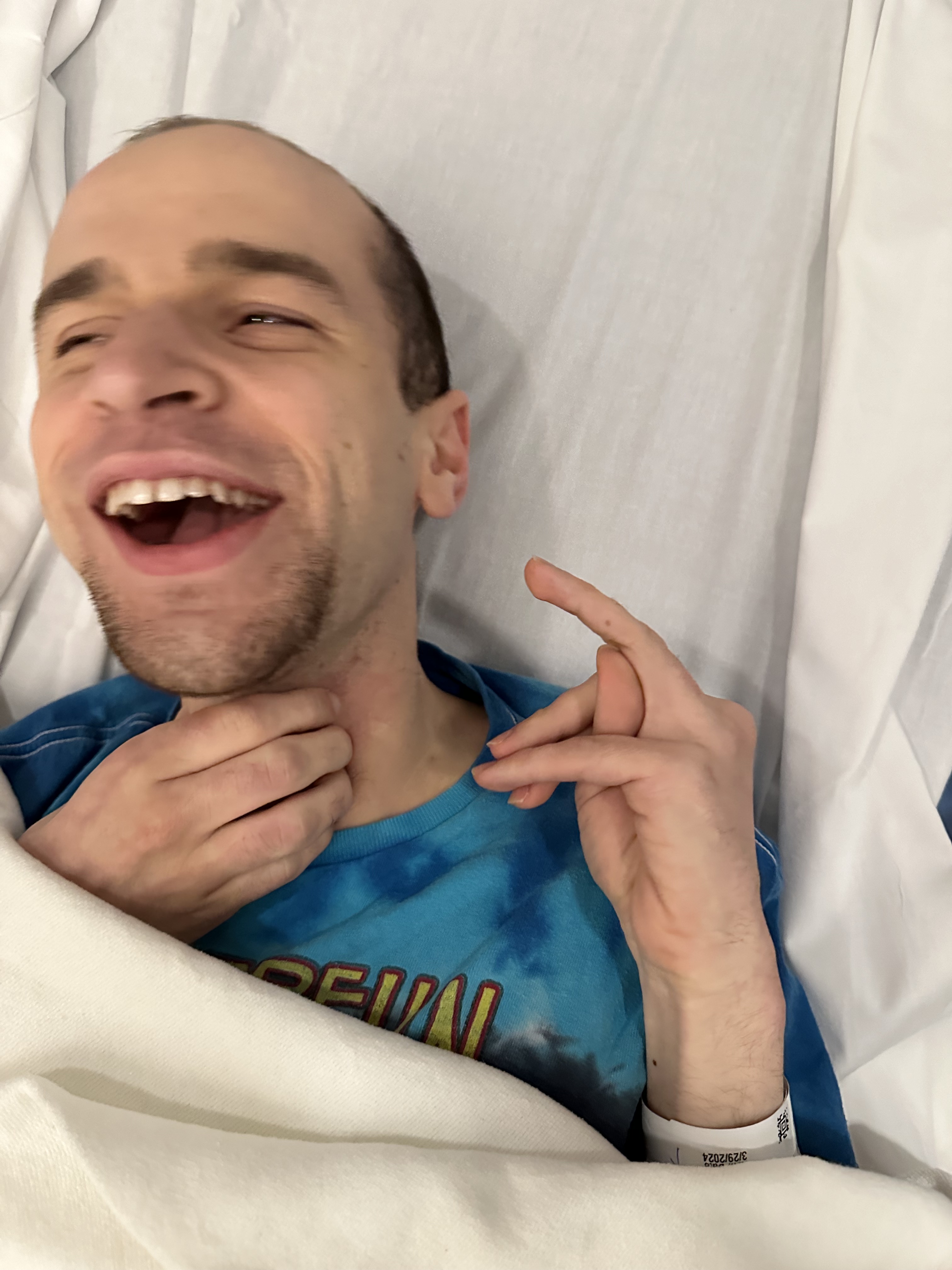
As I’ve been preparing for this call I’ve been recognizing that, although Jack can’t speak and is far more dependent than Laurie, there is more I can do to allow Jack to have some control. Slowing down and allowing Jack to feed himself, walk independently, and choose between The Office and Impractical Jokers are how I’m asking him if he wants to be pushed. He seems to enjoy this small shift and is doing his part by thanking me with one of his beautiful smiles.

Hope to see many of you on Thursday (sorry, ALD required).

Love, Jess

How many years?

This morning I sat down at the computer to write. Not a progress note or a treatment plan or a worksheet to help folks introduce mindfulness into their lives. I sat down to write a post on this blog to … Continue reading

All Good

He’s fine.

Good as new.

All smiles.

These are the answers I’ve been giving all week as people have reached out. Social media spread the word that our boy landed in the hospital over the weekend and people were worried.

We were so confused that Dan and I didn’t really have much time to worry.

Over the last 6 weeks Jack’s had many sick days. Some cold symptoms, a few vomit days and random spiking fevers. We managed to keep everything under control thanks to stress dosing his steroids and over-the-counter medication. We did take him to the doctor’s office a couple of times and also visited the local urgent care, but nobody seemed particularly worried. They ruled out the usual suspects – COVID, Flu, Strep and finally prescribed a round of antibiotics which we gave him and it seemed to resolve whatever was going on.

Then Jack spiked another fever last Thursday. We called his doctor who asked us to come in for some bloodwork. The results led to a call no parent wants. We were told to go to the ER. Now. Something was wrong. We were told his white blood count was 32 — dangerously high.

Dan and I didn’t pause. I guess it’s some sort of muscle memory that takes over when you’ve been a hospital parent. We went to the ER, described his symptoms, and started educating everyone about ALD. They started running tests – bloodwork, urinalysis, x-ray, CAT scan. As the hours ticked by, the doctors ruled out a ton of things, but by the afternoon they all agreed that we needed to be admitted, “Just to be safe”.

By this point Jack was feeling great. His fever was gone, and he was really enjoying his time with doctors and nurses and a marathon of Friends. He didn’t seem the least bit upset by the news that we were being admitted. Dan and I were less than excited.

Sleeping in a chair is not something I’ve missed. Neither are the bells and whistles constantly signaling on a hospital floor. But, getting news over and over that test results were normal kept us together.

They sent us home on Saturday afternoon with no answers. The hope is that whatever it was self-resolved. We do have an appointment with an infectious disease doctor in a couple of weeks, just to be safe.

So Folks – Jack is fine. Good as new. All smiles.

And, please cross your fingers that I haven’t somehow jinxed us by writing this☺️🤞🫣🤞

Love, Jess