Day # 6740 . . . Life for all of us Torreys has been pretty great lately — full of adventure, connection, and a few unexpected surprises. Last weekend, Mymom and I had the pleasure of attending the ALD Connect Annual … Continue reading
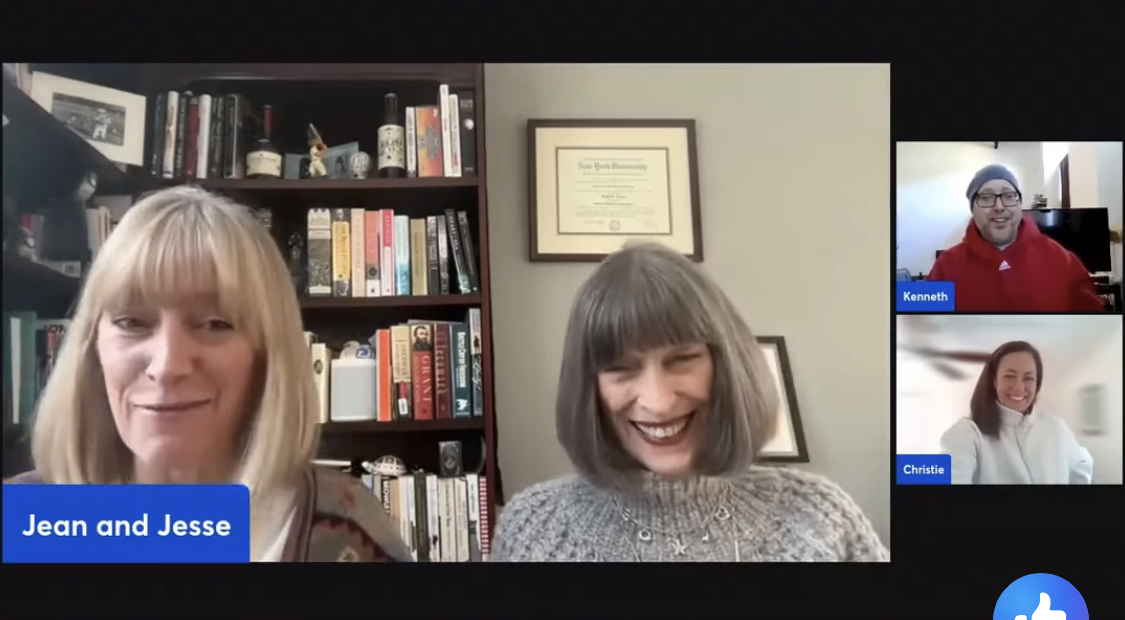
Next Thursday, January 30th, at 7 pm ALD Connect is hosting the monthly Mental Health Call where my friend/ALD hero, Emma, and I will lead a healthy discussion about the importance of communication within a caregiving relationship. Hoping to see many of our ALD Community next week, but I wanted to take the opportunity to share with all our Smiles and Duct Tape readers why we’ve chosen this topic.
Whether you’re an ALD family or not, there are many people who are part of a caregiving relationship — a caregiver or care receiver. Whether you’re caring/receiving care for/from your child or spouse or parent or sibling or friend — I want you to consider adding an important question to your communication, “Do you want me to push (help) you?”.
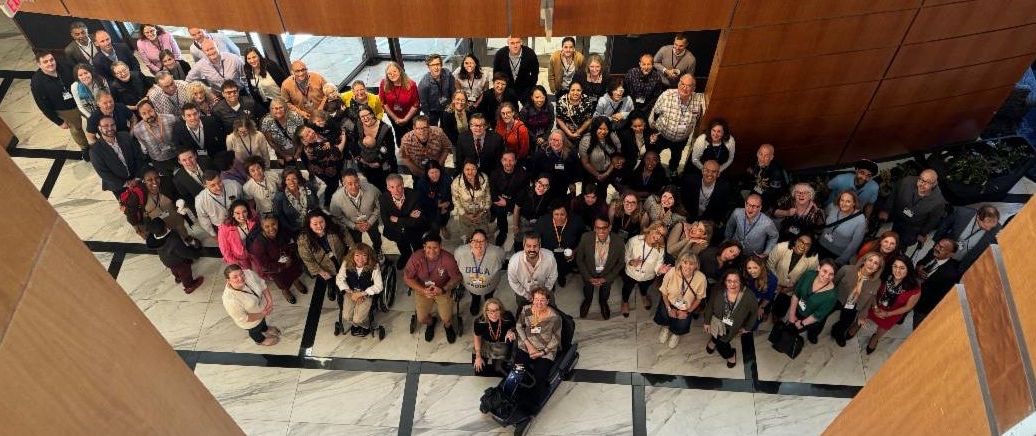
At the last ALD Connect Annual Meeting and Patient Learning Academy I had the pleasure of spending time with Laurie and Emma Hayes – two ALD folks I absolutely adore. They’re a mother/daughter duo who have always impressed me. Laurie, the mom, and is a symptomatic woman with ALD. Emma is her adult daughter.
Throughout the weekend I would hear Emma say the words, “Mom, do you want me to push you?” Repeatedly. Laurie would sometimes take the opportunity to be pushed around in her wheelchair and other times she would deny the help. She was in charge.
There was something powerful about witnessing this simple moment between a mother/daughter — care receiver/caregiver.
The question “Do you want me to push you?” symbolized more than just a literal action. It was recognition by Emma (the caregiver) of Laurie’s (the care receiver’s) autonomy, and it showed a commitment to working together. By asking and answering this question with honesty and openness, they were beautifully navigating their journey together with grace and understanding.
We all talked about this often overlooked part of a positive caregiving relationship. Receiving care can be a difficult thing for people to accept. It often involves coming to terms with one’s limitations. And providing care can also be challenging. Not only can it be exhausting, even messy, but without open communication a caregiver may do too little or too much. Without a conversation a caregiver may not appreciate the help their loved one needs. It’s easy to fall into the trap of doing too much, believing it’s the best way to help. Laurie shared the importance of caregivers to recognize that, although someone may require help with one thing doesn’t mean they need – or want – help with another. Overstepping boundaries can unintentionally undermine the care receiver’s confidence and independence. The key is to strike a balance—stepping in when help is needed while allowing the care receiver to maintain as much control as possible. Communication is the key.
The most successful caregiving relationships are built on mutual respect, trust, and open communication. Caregivers must remember that their role is to support, not to control. Care receivers, on the other hand, should embrace the partnership, acknowledging their caregiver’s efforts while maintaining their own sense of agency. Laurie is always quick to share how grateful she is for the help Emma provides. Another beautiful thing to witness.
As I’ve been preparing for this call I’ve been recognizing that, although Jack can’t speak and is far more dependent than Laurie, there is more I can do to allow Jack to have some control. Slowing down and allowing Jack to feed himself, walk independently, and choose between The Office and Impractical Jokers are how I’m asking him if he wants to be pushed. He seems to enjoy this small shift and is doing his part by thanking me with one of his beautiful smiles.
Hope to see many of you on Thursday (sorry, ALD required).
Love, Jess

When I first meet with a client, I always share that creating a healthy life – not a life of rainbows and sunshine, but a life where we struggle less – is creating a life where we have meaning, purpose and connection.
Viktor Frankl, a Holocaust survivor and renowned psychiatrist, said, “Life is never made unbearable by circumstances, but only by lack of meaning and purpose.” I add connection to the list because without connection we’re simply floating solo on this journey.
Meaning is the why behind what we do. It’s the lens through which we view our existence. It represents our priorities and values. Purpose is the how we honor our meaning – it’s the what we do. Purpose gives life structure and motivation, keeping us moving in a positive direction towards our meaning — even during difficult times. Connection is the DUCT TAPE that holds us together. It’s the relationships we build, the communities we nurture, and the experiences that bring us closer to others. Connection allows us to collaborate, support, and celebrate alongside others, reinforcing our sense of belonging. And, our connections often help us to find our meaning and work towards our purpose.
These are some questions to get started:
I just returned from this year’s ALD Connect Annual Meeting and Patient Learning Academy. All weekend I thought about meaning and purpose and connection. I thought about how meaning, purpose and connection have allowed me to survive – even thrive – following the diagnosis.
When you’re facing a complicated diagnosis like ALD, many find themselves caught up with concerns about their health and their future. It’s easy to get lost in a pile of what ifs and the cycle of daily routines, often leaving little time to reflect on what truly matters. We chase test results and tick off checklists, but without understanding what drives us, we risk feeling unfulfilled. Meaning, purpose and connection allow us new insights about what is truly important, gives us direction and motivation and provides us emotional support. It helps us take some power back and pay it forward.
17 ½ years ago ALD shattered our family. It took years to adjust to our new circumstances and appreciate the need for taking control of what we could. We couldn’t change our genes, but we could find meaning. We could move forward towards our purpose, and we could add to our connections.
I’ve said many times that ALD is a crappy/shitty/terrible disease, but the people are amazing. I want to thank the ALD community for allowing our family to find meaning and purpose and connection. I want to thank the ALD community for helping us struggle less.
Love, Jess
I know I have the reputation of being positive. I am a “glass half full” person by nature and I can usually find the bright side of any dark situation, but I do cry. I cry a lot. I cry … Continue reading
Seven years ago, I got a direct message from someone on Facebook. She explained she was a mom of a boy with ALD and a founding member of the board of an organization called ALD Connect. Apparently, she had just spent her flight to their annual meeting reading Smiles and Duct Tape.
“You need to join the community.”
I remember thinking that it was cool that my book – which had just been published – had landed in ALD hands.
Within a year I was attending conferences and learning more than I ever imagined about the disease that had infiltrated our family. I was speaking at conferences, helping organize a peer mentor program and facilitating monthly community calls.
When I asked myself several years ago what I wanted my next chapter to look like, I knew I wanted to do more of what I was doing within the ALD community. More within the community and more helping others who were struggling with acceptance/anxiety/depression. I reached out to the same woman who had sent me that message all those years ago (by now a dear friend) and asked her to write me a letter of recommendation for graduate school to study counseling for mental health and wellness.
That was three years ago.
Yesterday I had a full day seeing clients ranging from 10-years-old to 92-years-old and ended the day honored to be facilitating ALD Connect’s first session of The Mental Health Community Call.
While I was busy with my new life, Dan was out in the crypto world, Anna was at a Yankee game — celebrating after her first round of medical school exams, and Jack was with his “other family” where he happily spends a least one night a week.
I went to sleep last night doing an exercise that I often recommend to my clients. “As you close your eyes at the end of the day, think of three things that went well today”. I didn’t stop at three and fell asleep with a smile on my face.
It’s easy to recognize when things aren’t going well and important to give value when things do. I’m grateful for this moment where life just seems to make sense. Lord knows there will be other challenges ahead, but it sure feels good right now.
Thank you Kathleen for sending that note and starting all this AND for the letter of recommendation AND for trusting me to help our community AND for being you!
Love, Jess
ALD folks — join the call next month. It’s a great addition to The ALD Connect community calls!

As many of you know, I have a favorite daughter. It’s not just that she shares my love of Anthropologie and Madewell or that it’s fun watching her excel academically. I’m in awe of her strength and resilience and her ability to know what people around her need — especially her brother.
When Jack first got diagnosed, Anna was six years old. Our family changed overnight. Her life went from an idealic suburban childhood to her family scattering. We were completely focused on Jack – getting him treatment — saving his life. I don’t really remember much about what Anna did that summer. I know she took some classes at a local camp and that friends included her on many fun summer activities. Ivete arrived from Brazil. I’m not even sure how that happened but we will forever be grateful to her.
Sometimes at night while Jack’s hospital room was quiet, my mind would have a moment to think about something other than blood counts and GVHD testing I would wonder how Anna was coping and how all these changes were going to affect her life. Our nurses allowed us to bring Anna into Jack’s isolation room and turned a blind eye when she would spend the night. She and I would order delicious Dominican food, watch High School Musical and fight over my favorite blanket. There were times she would have me hold her tight and whisper questions she was scared to ask.
Dan and I agreed that we needed to be honest with her. She had lost the luxury of innocents.
And that summer was just the beginning. Jack came home and his life had changed dramatically, and it meant that all of our lives needed to adjust.
I know we should have done more for Anna, but those of you have gone through ALD (or any other complicated medical or emotional issue) diagnosis or treatment or the aftereffects – you know that the needs of the other kids in the family sometimes get lost.
Anna has thrived in her life and so many of the special siblings I’ve come to know over the years have also been quite remarkable. I’ve wondered what helps them and what can hurt them. I spent much of my time in graduate school researching these special siblings and appreciating that there is so much we can’t control when going through these complicated times BUT there are some things that we as parents/grandparents/friends can do to help these kids.
ALD Connect has recognized the importance of these special siblings and asked Anna and I if we would host a webinar discussing the topic. Once our community discovered we were working on this project, I’ve heard from countless people sharing their stories. Newborn screening families, early diagnosis, late diagnosis, siblings of folks with AMN and siblings of women with our disease. We are doing our best to represent all potential circumstances, but also hope to have time for discussion during the webinar. Time to learn from other families.
Please consider joining the Webinar this Wednesday at 7 pm. I hope this is the first of many.
CLICK HERE to register for the event.
Love, Jess
It’s not that easy bein’ green
Having to spend each day
The color of the leaves
When I think it could be nicer
Bein’ red or yellow or gold
Or something much more colorful like that
Kermit the Frog
It’s not easy being BLUE either.
ALD makes a lot of people in our community blue. It’s a disease that effects 1/17,000 people worldwide and causes symptoms including adrenal insufficiency, loss of vision and hearing, learning disabilities, seizures, loss of speech, fatigue, bladder and bowel issues, loss of mobility, and if not treated early (** and without a certain amount of luck) can lead to death.
While there’s so much to make us all blue, there is reason for our community to celebrate. ALD is a disease that has made some HUGE strides in the last few decades – improved treatments, new treatments, and newborn screening. The momentum is has started and we can’t let it slow down.
A year ago, my friend – and ALD warrior, Janis Sherwood, – had a magical idea. We always discuss possible ways of how the ALD community can better spread the word about our disease. Blue being the color connected to leukodystrophy awareness, Janis’s plan was — ALD Makes Me Blue. She wanted to turn our ALD blues into ALD BLUE — Dye our hair BLUE, paint our nails BLUE, wear BLUE, paint our whole darn bodies BLUE. She wanted our community to turn BLUE and then pass it on, like a dare.
Janis didn’t stop there with her plan. She wanted to have a way for the public to learn more about ALD and even make a small (or HUGE) donation to one of the many ALD organizations.
ALD organizations connected. A website was created. ALDMMB got itself onto social media. Some sore of fancy filter was put on Instagram: https://www.instagram.com/ar/538958721328767/
Today is the day!!!
February is Rare Disease Month and it’s time to turn the world BLUE!! Our family is going to start our month of BLUE and we want you – our duct tape – to do the same. Make yourself BLUE and don’t forget to take a photo and post it on Facebook and/or Instagram and TAG friends!!!
Please take a peek at the site, learn more about ALD, be BLUE, and make a donation.
CLICK HERE — ALD MAKES ME BLUE
GO BLUE!!!
Love, Jess
Monday, December 5th, NJ began screening newborns for ALD. They are the 31st state in our country that has added ALD to their newborn screening panel.
What does that mean?
It means that people in NJ will no longer receive a late diagnosis for ALD.
What does that mean?
It means that families will now be provided with knowledge and the power to monitor their children and treat ALD if/when needed.
What does that mean?
Jack’s story will be part of the history of our disease.
I try not to focus on the what ifs, but I will to help explain the enormity of this news. What if ALD been part of the newborn screening panel in NJ 25 years ago? We would have known that Jack had ALD shortly after his birth. We would have likely struggled to hear this news about our perfect, chubby, healthy first born, but we would have gotten through it and moved forward. We would have learned about ALD and found doctors who knew the disease. We would have been prepared. When Jack was a young boy, we would have recognized that Jack’s reactions to a simple illness where a result of adrenal insufficiency and that his behavior was not defiance or ADHD. We would not have wasted time. We would have gotten him treatment sooner. Had ALD been part of NJ newborn screening panel 25 years ago, Jack would have had a stem cell transplant earlier and he would likely be living a very typical life today.
It’s not just the pain we could have avoided. It’s not just the lack of words and independence and need for constant care. NJ spent well over $1,000,000 on Jack’s education. He now receives SSI, Medicaid, and support from DDD — and will for his entire life. Jack’s life is complicated/fragile, and he is also expensive to care for – for us/our state/our country.
So, this is a win WIN for future parents, NJ, taxpayers, and people who believe in the power of science!
I shared this news on social media yesterday and received a lot of notes assuming our family had a large role in this exciting development. We are very small fish in this beautiful pond. Elisa Seeger and the ALD Alliance, Taylor Kane and Remember the Girls, ALD Connect, and the piles and piles of doctors, parents and advocates made this happen!!!
There are still too many states who are NOT testing for ALD. If you live in one of those states, please let me know and I will connect you with people who can help you help to make it happen.
Love, Jesse

Just coming down from a magical weekend full of time with Mymom and Anna, hanging with old friends, meeting superheroes, and listening to informative, brilliant, inspiring information. Where was I?
ALD Connect’s Annual Meeting and Patient Learning Academy!
When I was asked to speak at the conference, I was honored but intimidated. Being among so many people who are changing the direction of our disease, I wondered what I could contribute. “The Burdens of Caregiving” was the topic. After some discussion we added “and Joys”. THANK GOODNESS – I couldn’t imagine spending 30 minutes listing burdens!!
I included two other ALD stories – other phenotypes of our disease — so that I could share a broader picture of what caring for a loved one with ALD looks like. Thank you Miranda and Laurie for your honesty and perspective (two of my ALD superheroes). I ended the presentation with a little story that I thought I would share here.


Three weeks ago, I fell. Just out walking my dogs, enjoying the fall weather. I can’t tell you exactly what happened – or if my own ALD had something to do with it — but suddenly my feet got confused and I hit the ground, hard. I broke a rib and without any notice I wasn’t able to do any of the caregiving that has defined my life for the last 15 years.
Anna came up from Baltimore to help out. She had to get Jack up and ready for school which can be a bit of challenge. One morning I heard her get Jack out of bed and then I heard a few comments about a mess. I watched from the couch as she walked to the laundry room with a big pile of laundry. A few minutes later, she walked through again holding a bag that I could only assume was a very soiled diaper.
“I am so sorry you need to deal with that Bananz”
“No worries mom – Sometimes you’ve just gotta wash your hands and move on”
And that is just what she did. A minute later I heard her singing along with 70s on 7 while dancing with her brother in the bathroom.
I think it’s important for us caregivers to remember that there will be a lot of messes to clean up – a whole lot of burdens – but if we can learn how to wash our hands and move on, we have a chance of appreciating some of the joys of caregiving.
Thank you, Anna, for your words AND your attitude!!!
Love, Jess
I have never been busier. In fact, I have no business writing anything right now that does not require APA citations. I just need to rest my brain and am hoping that writing here will calm me.
The last five days have been wonderful but nuts! We’ve been to Tuxedo Park to hang with the Cappello Crew, hosted a dinner party, hosted a brunch, facilitated an ALD Caregiver’s call, written a 12-page paper digging deep into my cultural identity, listened to three lectures, read 73 pages of research articals (at least I said I read them), attended three classes, spent an hour at PT for my shoulder, completed forms for Jack’s adult program, completed forms for my internship, and made and canceled at least 5 doctor’s appointments.
In the next five days we are having my nephews and sister-in-law over for some fun, going to Tuxedo Park to hang with my folks and celebrate Jack’s birthday – while the family is boating and hiking and swimming, I will be going to NYU’s Virtual Emersion (hours and hours of intensive group therapy). On Saturday when I wrap up the Emersion, I log on the ALD Connect’s Bootcamp for Women with ALD. Sunday we are having Jack’s “other mothers and fathers” for some more birthday fun.
Jack turning 23, fascinating experiences in my MA program, a trip to my parent’s lovely new home, seeing friends and family – so much great stuff, just so little time to enjoy it.
I need more time!!!!!!!
Okay – that did not work. My heart is now racing. Gotta run and put some clothes on so that I can log on to my class.
I promise to share photos of Jack’s birthday (and maybe a couple of me sitting at a desk with a box of tissues next to me).
Love, Jess