Do you want me to push you?

Next Thursday, January 30th, at 7 pm ALD Connect is hosting the monthly Mental Health Call where my friend/ALD hero, Emma, and I will lead a healthy discussion about the importance of communication within a caregiving relationship. Hoping to see many of our ALD Community next week, but I wanted to take the opportunity to share with all our Smiles and Duct Tape readers why we’ve chosen this topic.

Whether you’re an ALD family or not, there are many people who are part of a caregiving relationship — a caregiver or care receiver. Whether you’re caring/receiving care for/from your child or spouse or parent or sibling or friend — I want you to consider adding an important question to your communication, “Do you want me to push (help) you?”.

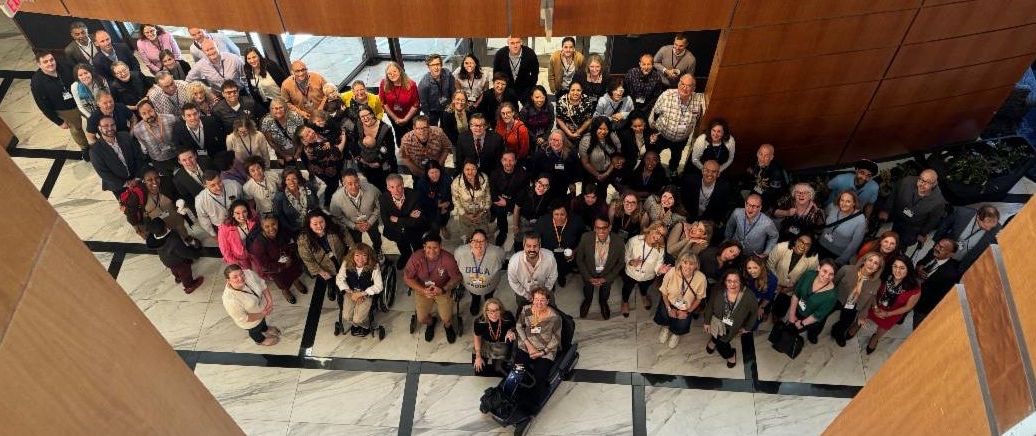
At the last ALD Connect Annual Meeting and Patient Learning Academy I had the pleasure of spending time with Laurie and Emma Hayes – two ALD folks I absolutely adore. They’re a mother/daughter duo who have always impressed me. Laurie, the mom, and is a symptomatic woman with ALD. Emma is her adult daughter.

Throughout the weekend I would hear Emma say the words, “Mom, do you want me to push you?” Repeatedly. Laurie would sometimes take the opportunity to be pushed around in her wheelchair and other times she would deny the help. She was in charge.

There was something powerful about witnessing this simple moment between a mother/daughter — care receiver/caregiver. 

The question “Do you want me to push you?” symbolized more than just a literal action. It was recognition by Emma (the caregiver) of Laurie’s (the care receiver’s) autonomy, and it showed a commitment to working together. By asking and answering this question with honesty and openness, they were beautifully navigating their journey together with grace and understanding. 

We all talked about this often overlooked part of a positive caregiving relationship. Receiving care can be a difficult thing for people to accept. It often involves coming to terms with one’s limitations. And providing care can also be challenging. Not only can it be exhausting, even messy, but without open communication a caregiver may do too little or too much. Without a conversation a caregiver may not appreciate the help their loved one needs. It’s easy to fall into the trap of doing too much, believing it’s the best way to help. Laurie shared the importance of caregivers to recognize that, although someone may require help with one thing doesn’t mean they need – or want – help with another. Overstepping boundaries can unintentionally undermine the care receiver’s confidence and independence. The key is to strike a balance—stepping in when help is needed while allowing the care receiver to maintain as much control as possible. Communication is the key.

The most successful caregiving relationships are built on mutual respect, trust, and open communication. Caregivers must remember that their role is to support, not to control. Care receivers, on the other hand, should embrace the partnership, acknowledging their caregiver’s efforts while maintaining their own sense of agency. Laurie is always quick to share how grateful she is for the help Emma provides. Another beautiful thing to witness.

As I’ve been preparing for this call I’ve been recognizing that, although Jack can’t speak and is far more dependent than Laurie, there is more I can do to allow Jack to have some control. Slowing down and allowing Jack to feed himself, walk independently, and choose between The Office and Impractical Jokers are how I’m asking him if he wants to be pushed. He seems to enjoy this small shift and is doing his part by thanking me with one of his beautiful smiles.

Hope to see many of you on Thursday (sorry, ALD required).

Love, Jess

Meaning, Purpose, Connection

When I first meet with a client, I always share that creating a healthy life – not a life of rainbows and sunshine, but a life where we struggle less – is creating a life where we have meaning, purpose and connection.

Viktor Frankl, a Holocaust survivor and renowned psychiatrist, said, “Life is never made unbearable by circumstances, but only by lack of meaning and purpose.” I add connection to the list because without connection we’re simply floating solo on this journey.

Meaning is the why behind what we do. It’s the lens through which we view our existence. It represents our priorities and values. Purpose is the how we honor our meaning – it’s the what we do. Purpose gives life structure and motivation, keeping us moving in a positive direction towards our meaning — even during difficult times. Connection is the DUCT TAPE that holds us together. It’s the relationships we build, the communities we nurture, and the experiences that bring us closer to others. Connection allows us to collaborate, support, and celebrate alongside others, reinforcing our sense of belonging. And, our connections often help us to find our meaning and work towards our purpose.

These are some questions to get started:

  • What experiences in your life have you found fulfilling?
  • Which activities or causes make you feel like you are contributing to something bigger than yourself?
  • What are your strengths and passions that can help others or contribute positively to the world?
  • When do you reach out to friends and loved ones, not just when you need something, but simply to connect?
  • What are the communities or groups that share your interests and values?

I just returned from this year’s ALD Connect Annual Meeting and Patient Learning Academy. All weekend I thought about meaning and purpose and connection. I thought about how meaning, purpose and connection have allowed me to survive – even thrive – following the diagnosis.

When you’re facing a complicated diagnosis like ALD, many find themselves caught up with concerns about their health and their future. It’s easy to get lost in a pile of what ifs and the cycle of daily routines, often leaving little time to reflect on what truly matters. We chase test results and tick off checklists, but without understanding what drives us, we risk feeling unfulfilled. Meaning, purpose and connection allow us new insights about what is truly important, gives us direction and motivation and provides us emotional support. It helps us take some power back and pay it forward.

17 ½ years ago ALD shattered our family. It took years to adjust to our new circumstances and appreciate the need for taking control of what we could. We couldn’t change our genes, but we could find meaning. We could move forward towards our purpose, and we could add to our connections. 

I’ve said many times that ALD is a crappy/shitty/terrible disease, but the people are amazing. I want to thank the ALD community for allowing our family to find meaning and purpose and connection. I want to thank the ALD community for helping us struggle less.

Love, Jess