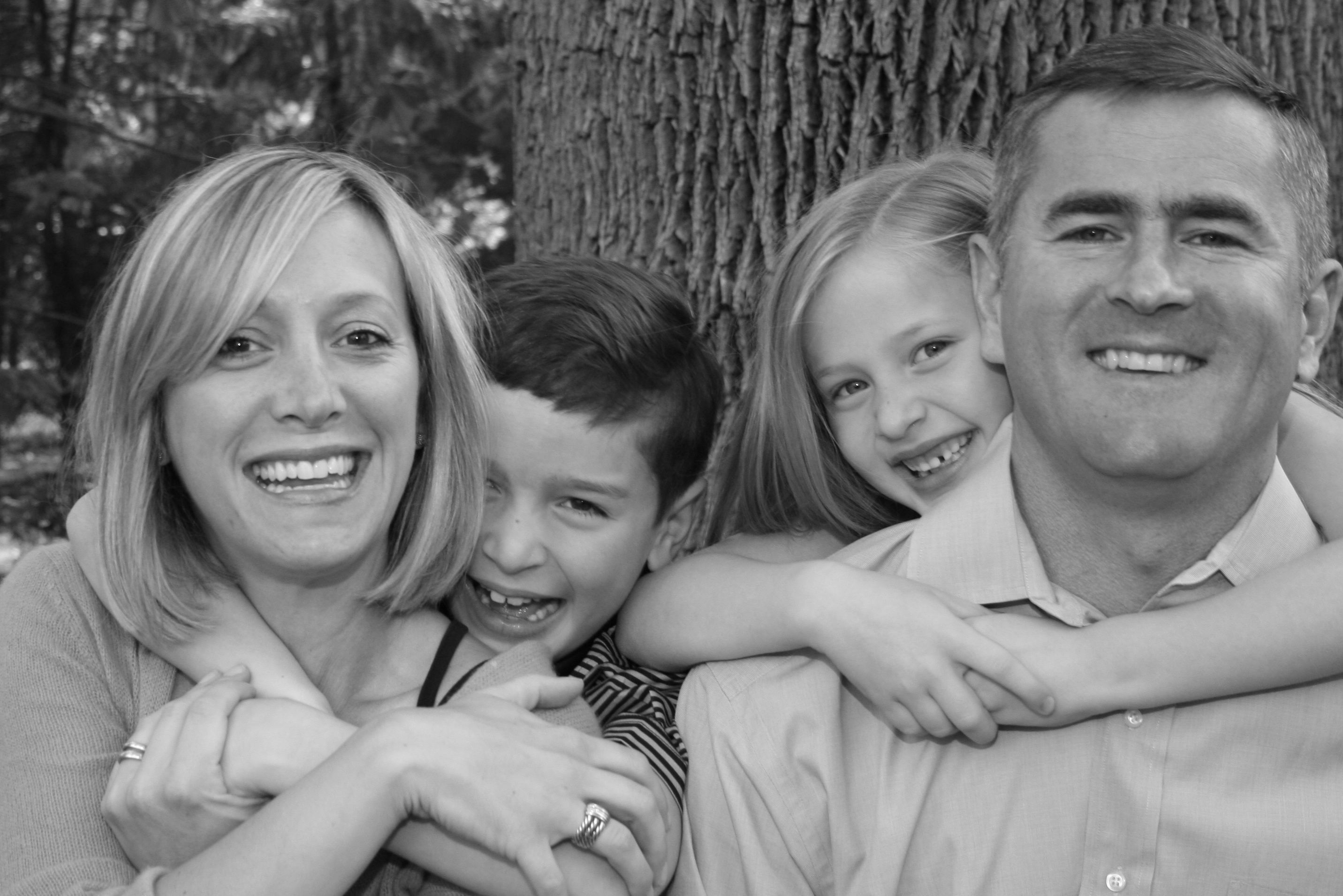
This photo was taken nineteen years ago. Jack had finally been diagnosed after months of struggling and ten days of intense in-patient testing. The doctors sent us home while they worked to come up with a plan and our dear friend, Kim Vivenzio, came over one afternoon to take some photos of our family. There is so much happening behind those smiles.
Nineteen years ago, we were suspended in time.
We had just received Jack’s ALD diagnosis, and suddenly everything we thought we knew about the future dissolved. We weren’t moving forward, but we weren’t standing still either. We were in a holding pattern — waiting for our team to find a donor, waiting for a plan, waiting for something solid to hold onto.
We felt powerless.
We had to learn to trust. Trust the doctors. Trust the process. Trust that somehow, something would come together. Trust that Jack would survive.
But trust, in those moments, didn’t feel strong or inspiring. It felt fragile. It felt like choosing to believe when you have absolutely no evidence that things will be okay. Nineteen years ago, hope needed to live right alongside trust. Not loud, not flashy—just steady. A quiet voice that said, keep going, keep breathing, keep believing that there will be a next step. Keep believing that Jack will survive – that our family will survive.
That combination — trust and hope — carried us through. Not just then, but through the years that followed.
Because here’s the thing about a holding pattern — it doesn’t always end when you think it will. It didn’t end on Jack’s transplant day or Day 100 or when he returned to school. Life with ALD has a way of bringing you back to that holding pattern again and again. Different circumstances, different fears, but the same feeling of waiting, of not knowing. Of needing to trust and hope.
Over time, something else joined trust and hope – acceptance. Not resignation. Not giving up. But a deeper understanding of what we can and cannot control.
We learned to loosen our grip on the unknown and hold more tightly to what was right in front of us — our family, our friends, our moments, our small victories. We learned that appreciation isn’t something that comes after things get better. It’s something you MUST practice in the middle of the uncertainty.
Lately, I’ve been spending more time listening to families who are newly diagnosed with ALD. Their holding pattern looks different. Their boys are healthy. They are living full, beautiful lives. And yet, they are needing to find a team of doctors and monitor their boys (including those tough MRI days). There’s this quiet question always present: if… when… will things change?
It’s a different kind of holding pattern. Not in the middle of a storm, but a constant undercurrent of uncertainty. There’s no immediate crisis, no urgent plan—but there is the weight of not knowing. That kind of waiting can be just as heavy.
Different stories. Different timelines. But the same need to trust and hope and accept.
We all need to learn how to trust without guarantees. We all need to hold onto hope, even when it feels fragile. We all have to find a way to accept what we cannot control. Holding patterns are uncomfortable, but they also shape us. They teach us how to stay present, how to pause and be grateful, how to love deeply, how to live fully—even when the future feels uncertain.
Nineteen years after Jack’s diagnosis, I can say that sometimes we feel like we are still in a holding pattern, but we know how to trust and hope and accept. AND, we are forever grateful for all of our smiles and duct tape.
Love, Jess


Tatess- This is wonderful. I think it is the best thing you have ever written. It gives such clear guidance to of anyone facing terrible trouble. You four in that picture are wondrous. abrazos y cariños-mom
>
LikeLike
Beautifully stated Jess! We’ve been through all these emotions and still some, even years after transplant. I’m sure your words touched home for so many ALD families. Thank you for continuing to write and be a present and loving support in our community!
LikeLike